
White-tailed Antsangy
Species profile · Exotic rodents
White-tailed Antsangy
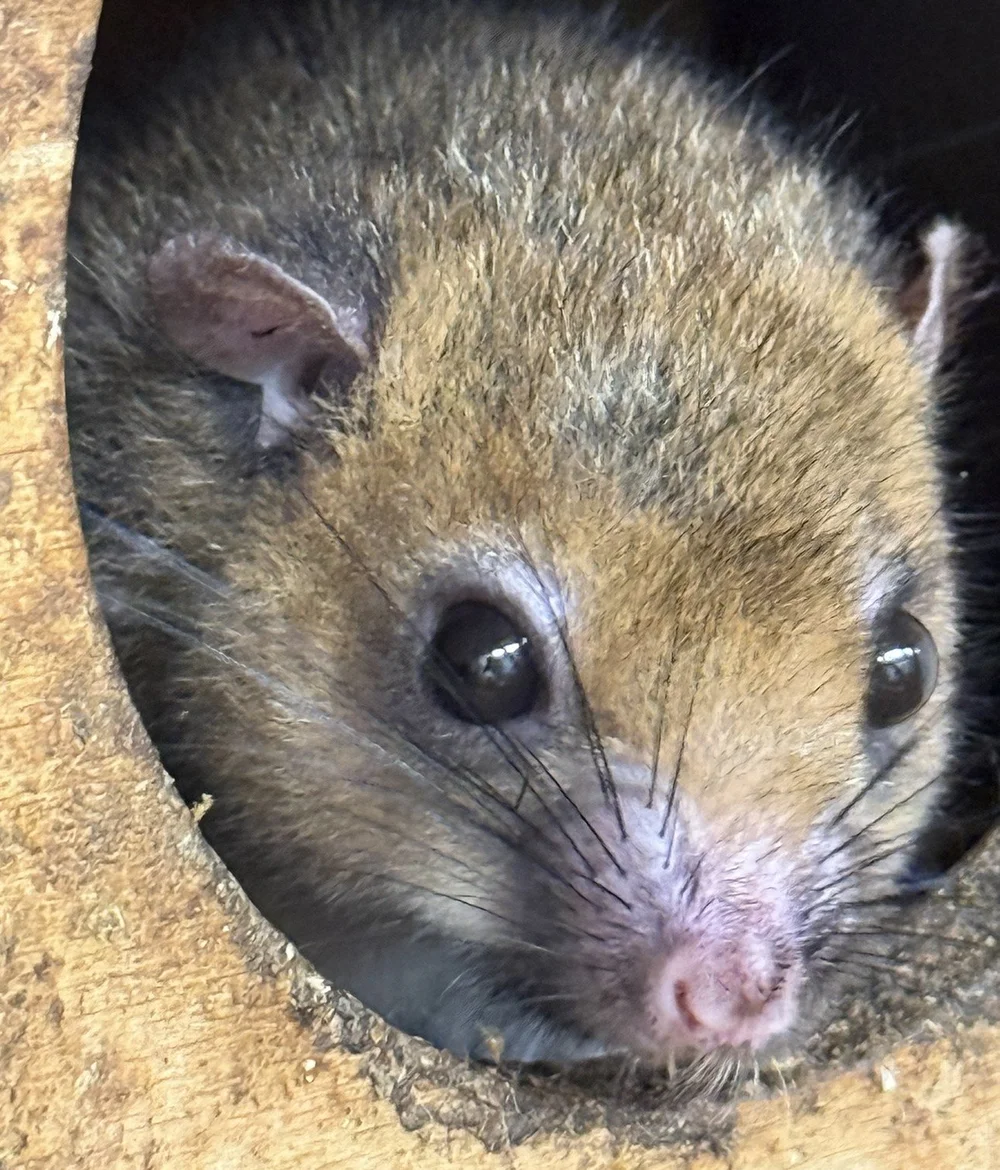
Brachytarsomys albicauda
A forest-dwelling rodent from Madagascar, adapted to a life among branches and tree hollows.
- Classification
- Rodentia · Nesomyidae
- Native range
- Eastern Madagascar
- Habitat
- Tropical forest
- Activity
- Nocturnal
- Wild diet
- Mainly fruit; also seeds
- Lifestyle
- Arboreal · tree-dwelling
01 · In the wild
Natural history
Range & habitat
Native to Madagascar, this species is associated with the tropical forests of the island’s east. Tree hollows provide sheltered nesting places.
Built for climbing
Curved claws and a long, flexible tail suit life in the trees. An elongated outer toe on the hind feet helps with gripping branches.
After dark
White-tailed Antsangy are nocturnal. They move along branches between nesting and foraging areas, rather than relying on travel across the forest floor.
Food & foraging
Published accounts describe a largely fruit-based diet, with seeds also eaten. Details of their feeding ecology remain incompletely documented.
Much of this species’ behaviour and breeding ecology remains poorly studied. Published observations should be distinguished from experiences with animals in human care.
02 · At Exotic Rodentry
Within our collection
Collection notes updated: 23 October 2026
These notes describe our own animals and experience. Feeding details record our current practice and are not a complete care guide.
We first kept White-tailed Antsangy in 2026. Their scarcity in captivity, Madagascan origins and relatively poorly documented behaviour made them a particularly interesting species to work with.
First kept
2026
Current animals
One male and one female
How our pair came together
We initially collected two males and a female. The males subsequently joined females with another private keeper, and we brought in a male from a different public collection to broaden the breeding options. Our current female came from a private keeper who was no longer keeping the species.
Housing & enrichment
Our pair live in a metal-sided enclosure with a mesh top, furnished with plenty of branches for climbing. A parakeet nest box is a particular favourite, alongside other boxes of different shapes and sizes. Soil substrate, leaf litter and leafy browse provide opportunities to explore and places to retreat.
We offer browse such as willow and fruit-tree branches, although the leaves are often quickly stripped. Suspending fruit and vegetables from feeding skewers encourages climbing and makes feeding more engaging.
Feeding observations
We are still refining their diet and monitoring body condition, having noticed a tendency towards excess weight in some captive animals. At present we offer a selection of dry foods, including rodent blocks, hamster and gerbil mix, a fruit-containing parrot mix and vegan dog kibble, with vegetables and small portions of fruit through the week.
Ripe fruit is popular, but fresh corn on the cob is the clear favourite. It is usually eaten first or carried straight into the nest box.
Individual character
Although they are nocturnal, they will sometimes wake to investigate what we are doing, especially when fruit or corn is involved. At other times they sleep through the work around them, occasionally in positions that gave us quite a fright at first!
Temperaments vary considerably. Some animals readily take food from the hand, while others are much more defensive. We have found females particularly protective around young, so we approach each individual on its own terms.
Breeding experience
Our current female has produced two litters, both born here in our collection. One was successfully reared to weaning, while the other was lost during the early stages in the nest. In our experience so far, removing the male has been associated with better rearing success, although these observations come from a small number of litters.
Lessons & future plans
One lesson has been just how determined their chewing can be. Wooden fittings need regular checking, and young animals can squeeze through surprisingly small gaps compared with the adults.
We hope to continue breeding from the current pair and exchange young with other keepers to establish further breeding pairs while maintaining as much genetic diversity as possible.
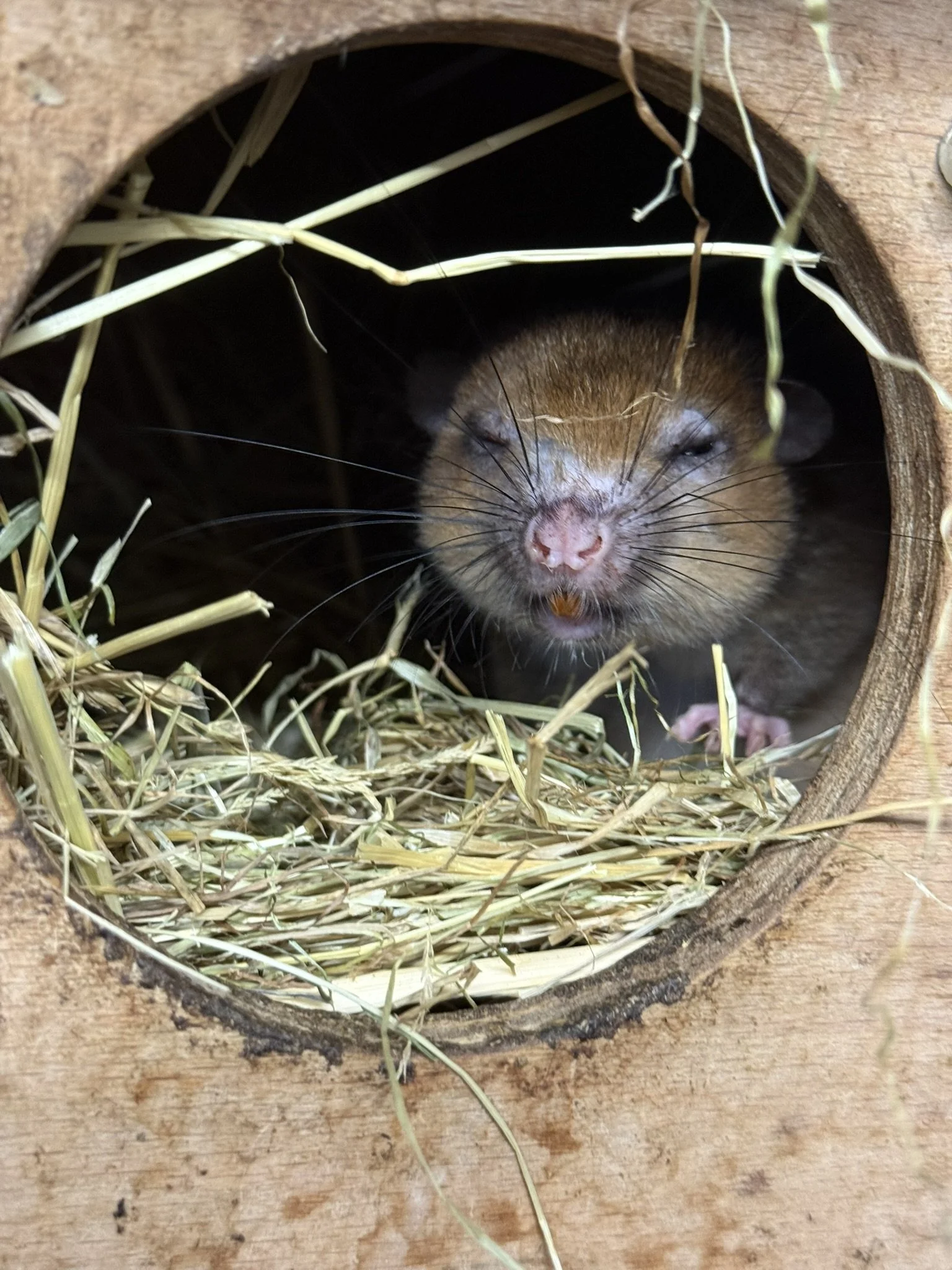
From our collection
Collection photographs
03 · Explore further
Sources & further reading
Animal Diversity Web — species account
Birkinshaw, 2009. Natural history, adaptations and behaviour.
Exmoor Zoo — White-tailed Antsangy
Additional species information and dietary context.
Natural history reviewed: 23 October 2026. Collection notes updated: 23 October 2026.
Scientific name	Brachytarsomys albicauda
Animal group	Rodent
Natural range	Madagascar
Activity	Nocturnal
Diet	Omnivorous
Social structure	Small family group
Status with us	Current breeding group