
Species profile · Exotic Rodents
Black-tailed prairie dog
Cynomys ludovicianus
Despite its name, the black-tailed prairie dog is a ground-dwelling member of the squirrel family. These highly social rodents live in colonies known as towns, with smaller family territories called coteries.
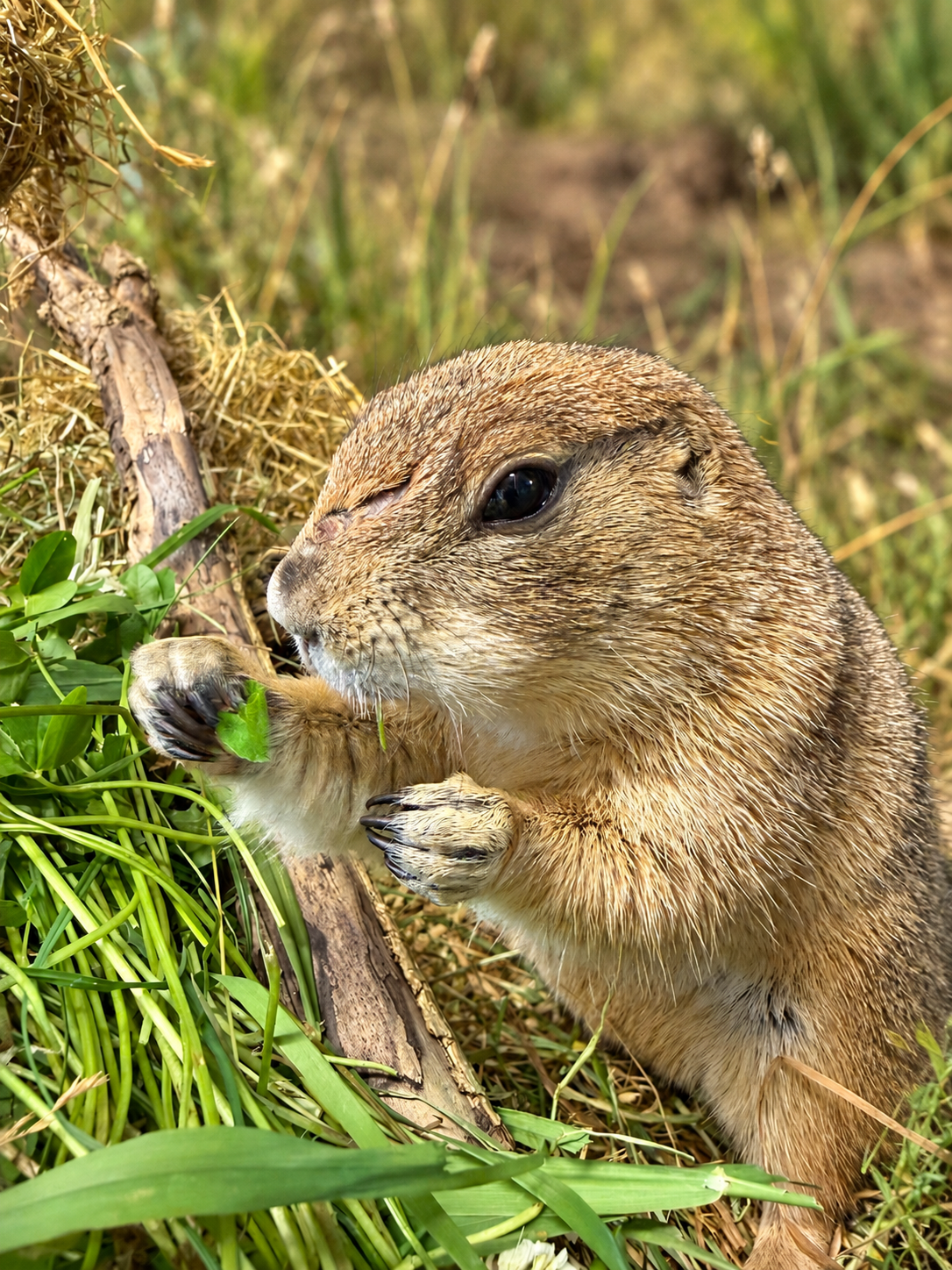
- Classification
- Rodentia · Sciuridae
- Native range
- North American Great Plains
- Habitat
- Open short-grass prairie
- Activity
- Diurnal · active by day
- Wild diet
- Grasses and other vegetation
- Lifestyle
- Colonial · burrowing
In the wild
Natural history
Distribution & habitat
Native to the Great Plains of North America, this species favours open grassland with good visibility. Burrow networks provide nesting places and refuge from predators and harsh weather.
Behaviour & activity
Neighbours communicate through calls, posture and physical contact. Alarm calls warn of danger, while the conspicuous jump-yip display can spread through a colony. Winter activity varies. Some populations use bouts of torpor, and regular winter hibernation is documented in Canada.
Diet & foraging
Most food is plant material, including grasses, leafy herbs, stems and roots. Feeding choices change with seasonal availability, and animals commonly forage close to burrow entrances.
Life cycle & reproduction
Breeding is seasonal, usually producing one litter per year. Females are typically receptive for a single day, although a second fertile period can occur if the first does not result in pregnancy. Young are born and develop underground.
At Exotic Rodentry · Notes updated October 2026
Within our collection
Collection notes updated: 23 October 2026
These notes describe our own animals and experience. Feeding details record our current practice and are not a complete care guide.
we have kept black-tailed prairie dogs since 2008 and have bred them on several occasions. Their communication, seasonal changes and strong individual personalities have kept us fascinated ever since.
Our current pair
We currently keep one male and one female, both born in 2026 at another small collection. They are friendly and comfortable with handling, and we hope they will become ambassadors at suitable shows and educational events.
Over the years we have kept larger groups and experienced the excitement of the first litters born here. We have also taken on males with poor coat condition and excess weight, watched their condition improve, and later seen them become fathers within a group.
Housing & future plans
The current pair live in a metal enclosure within the main animal building. We plan to move them into a purpose-built outdoor enclosure in spring 2027.
Previous groups have lived in bespoke enclosures with deep substrate, tunnels and nesting chambers. Our enclosure planning prioritises resistance to chewing and digging, secure containment at ground level and opportunities to create multiple tunnels and chambers.
When a nest box is set into the substrate, we find a top-opening inspection lid useful, with a separate entrance for the animals at the front.
Digging, foraging & enrichment
If we had to sum up their favourite activity, it would be “digging, digging and more digging”. Providing opportunities to excavate has always been central to how we keep them.
We scatter selected dry foods and occasional live foods to encourage foraging and movement. Wood and browse provide material to gnaw. Some of our animals have used suitably sized exercise wheels, although their enthusiasm for chewing can make replacements expensive.
Feeding in our collection
The staple foods we offer are grass pellets, freely available hay, fresh grasses and leafy greens. Vegetables add variety, with live foods offered occasionally. A mixed dry rodent food is provided in smaller quantities, usually weekly.
We adjust the amounts offered with seasonal activity and keep their body condition in mind, rather than treating summer and winter feeding as identical.
Character & seasonal behaviour
The range of communication and social behaviour is a large part of their appeal. In larger groups we have seen smaller social units form, alongside very distinct personalities.
They can be affectionate and engaging, but they also keep us on our toes. In our experience, a usually friendly male can become markedly defensive during the breeding season, including towards familiar caregivers. That change can seem to happen overnight, then ease as the season passes. It has taught us not to become complacent about handling or enclosure access.
Breeding experience
We have bred prairie dogs several times, with one litter per breeding female in a season. Litters in our collection have generally arrived around May. Watching the first young appear was a particularly memorable milestone.
Seasonal changes have been an important part of our own breeding experience. The relationship between the seasons, social behaviour and reproduction is one of the things we find most interesting about this species.
Looking ahead
We would like to establish a larger group and breed again in the future. Our aim is to source animals from a range of suitable backgrounds, with careful attention to relatedness and genetic diversity.
From our collection
Collection photographs
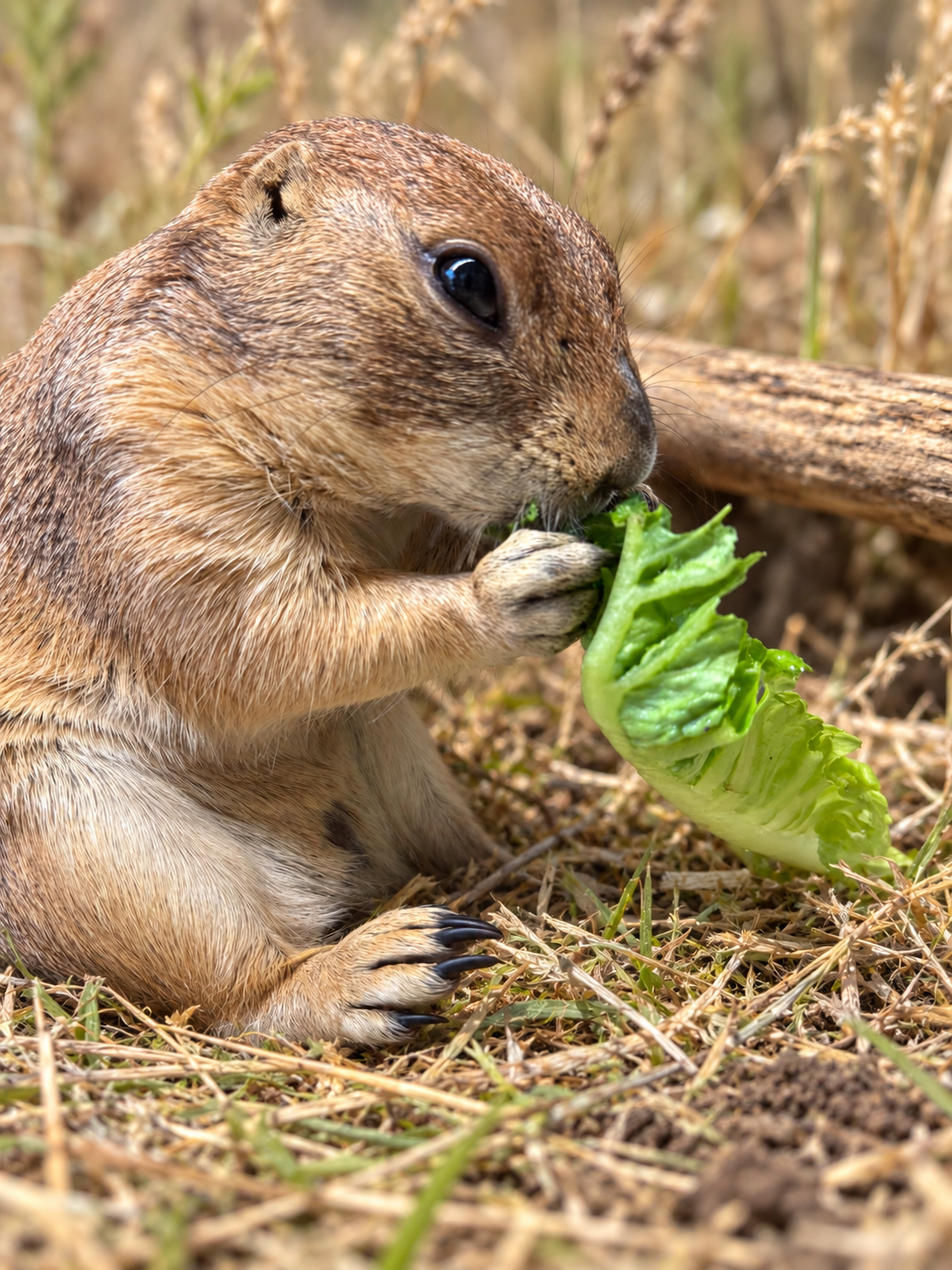
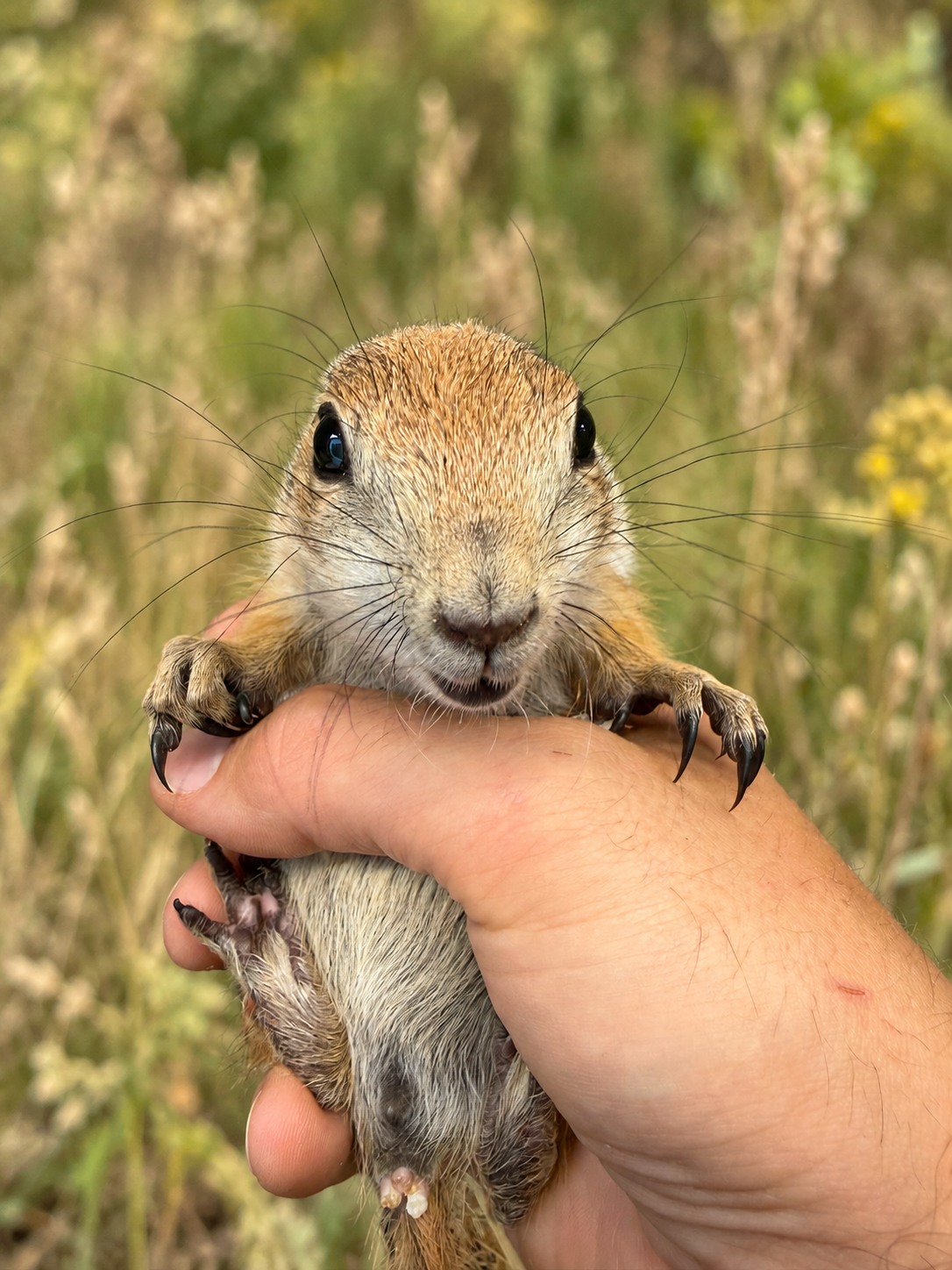
Our own animals, photographed in our collection. Enclosure backgrounds have been edited for presentation.
Sources & further reading
- Animal Diversity Web — Cynomys ludovicianus
- COSEWIC (2024) — seasonal biology, reproduction and variable winter torpor
- San Diego Zoo Wildlife Alliance — black-tailed prairie dog fact sheet
Natural history reviewed: 23 October 2026. Collection notes updated: 23 October 2026.