
Species profile · Exotic Rodents
Fat-tailed gerbil (Duprasi)
Pachyuromys duprasi
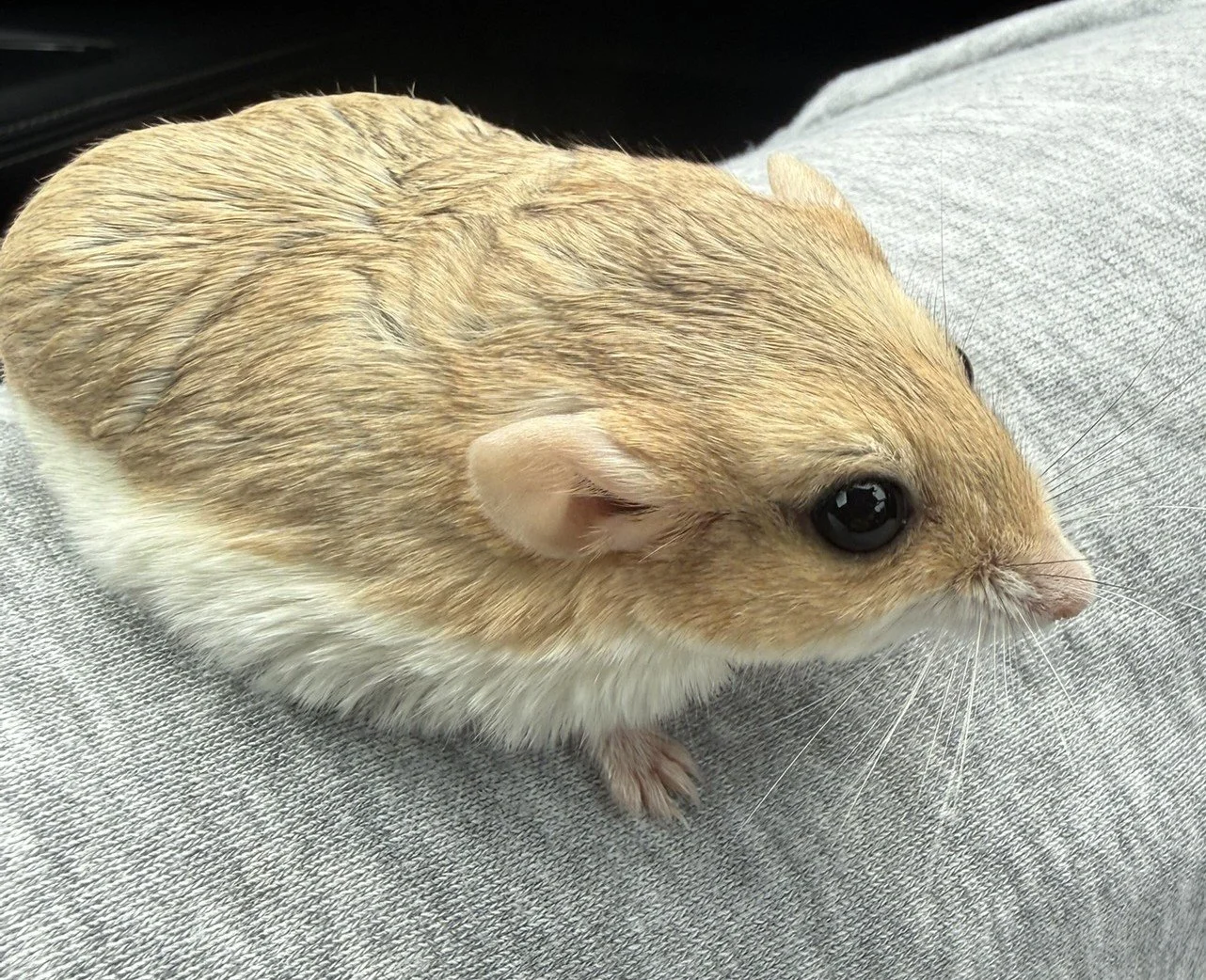
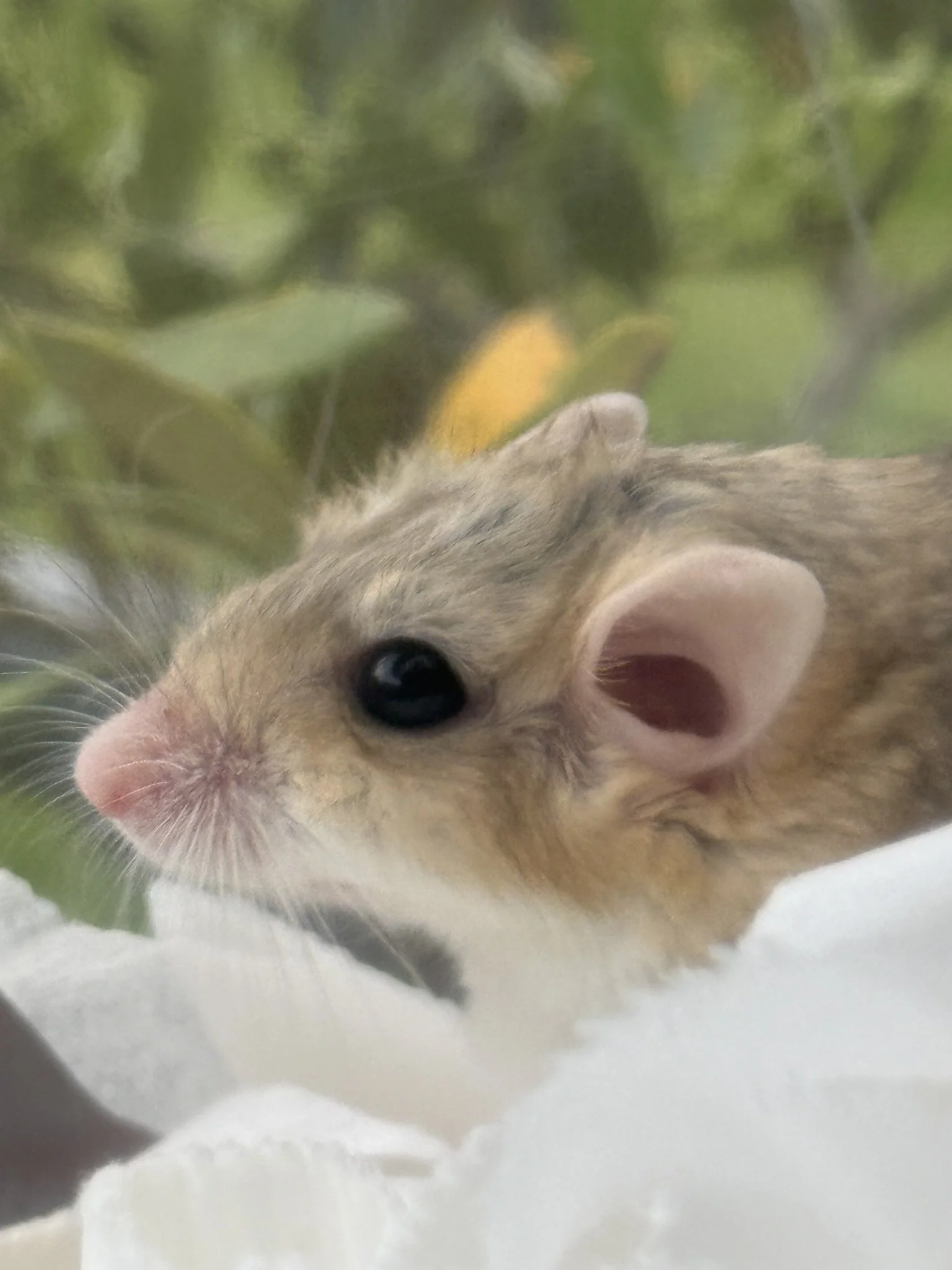
Known as the duprasi and affectionately called a “doop” among keepers, this small North African gerbil has soft fur, a rounded body and a distinctive club-shaped tail that stores fat. Its desert life centres on sheltering underground and emerging to forage.
- Classification
- Rodentia · Muridae
- Native range
- North Africa
- Habitat
- Sandy and rocky desert
- Activity
- Mainly dusk and night
- Wild diet
- Insects and plant material
- Lifestyle
- Burrowing
In the wild
Natural history
Distribution & habitat
Found from Algeria and Tunisia through Libya to Egypt, fat-tailed gerbils occupy sparsely vegetated desert. They shelter in burrows, sometimes using tunnels made by other rodents.
Behaviour & activity
Activity often begins around dusk. Periods of movement alternate with long rests; encounters between individuals can also involve territorial aggression.
Diet & foraging
Insects are an important part of the wild diet, alongside seeds and other plant material. This mixed diet distinguishes the duprasi from the familiar image of a purely seed-eating gerbil.
Life cycle & reproduction
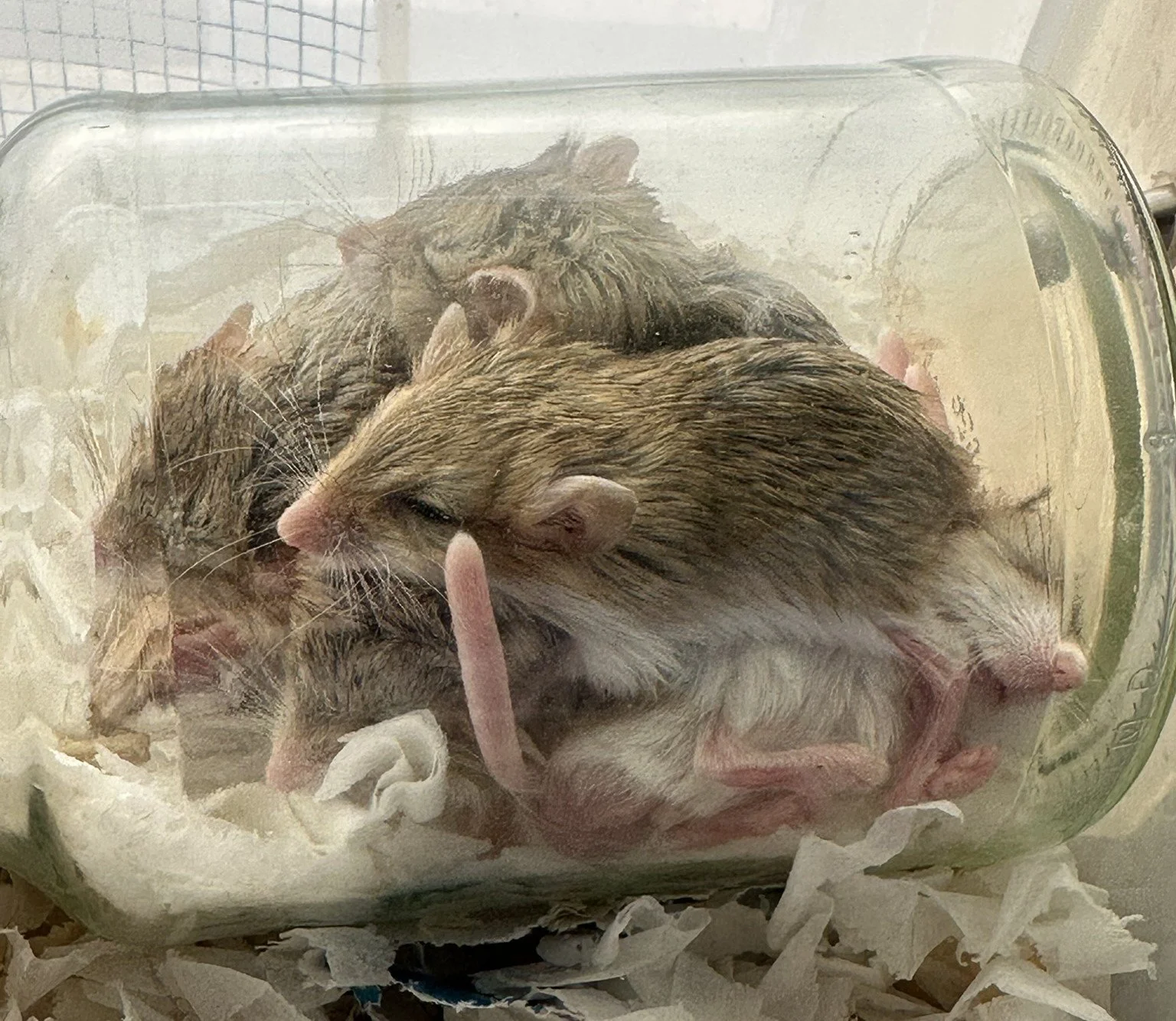
Captive studies report a gestation of roughly three weeks. Young are born blind and hairless and depend on their mother, with weaning typically around three to four weeks.
At Exotic Rodentry · Notes updated October 2026
Within our collection
Collection notes updated: 23 October 2026
These notes describe our own animals and experience. Feeding details record our current practice and are not a complete care guide.
We have kept duprasi since 2005. More than twenty years later, these little “doops” are still a firm favourite, with their distinctive tails, individual characters and remarkable capacity to relax.
How it began
Our first doops came from a pet shop during our teenage years. Their desert adaptations and unusual tails initially caught our attention, but it was their often laid-back character that made us fall for them.
We later obtained animals for breeding from a rodent wholesaler in Mid Wales. The early attempts involved plenty of learning, and the first litters raised in our childhood bedroom remain particularly memorable. Finding those first youngsters successfully weaned was a wonderful surprise.
Our animals & bloodlines
The collection currently includes several breeding pairs and a number of older, retired doops. Numbers change as youngsters are born, animals are retained for future breeding and others leave for new homes.
We have brought in animals from across the UK and Europe with the aim of broadening the breeding stock. We have previously maintained animals described as distinct localities or subspecies. The current collection includes mixed backgrounds, so we do not present those lines as locality-pure.
Housing & nesting
Over the years we have worked with a wide range of enclosures, including naturalistic vivariums and more conventional breeding accommodation. Deep digging substrate and a choice of nest sites have been particularly important in our experience.
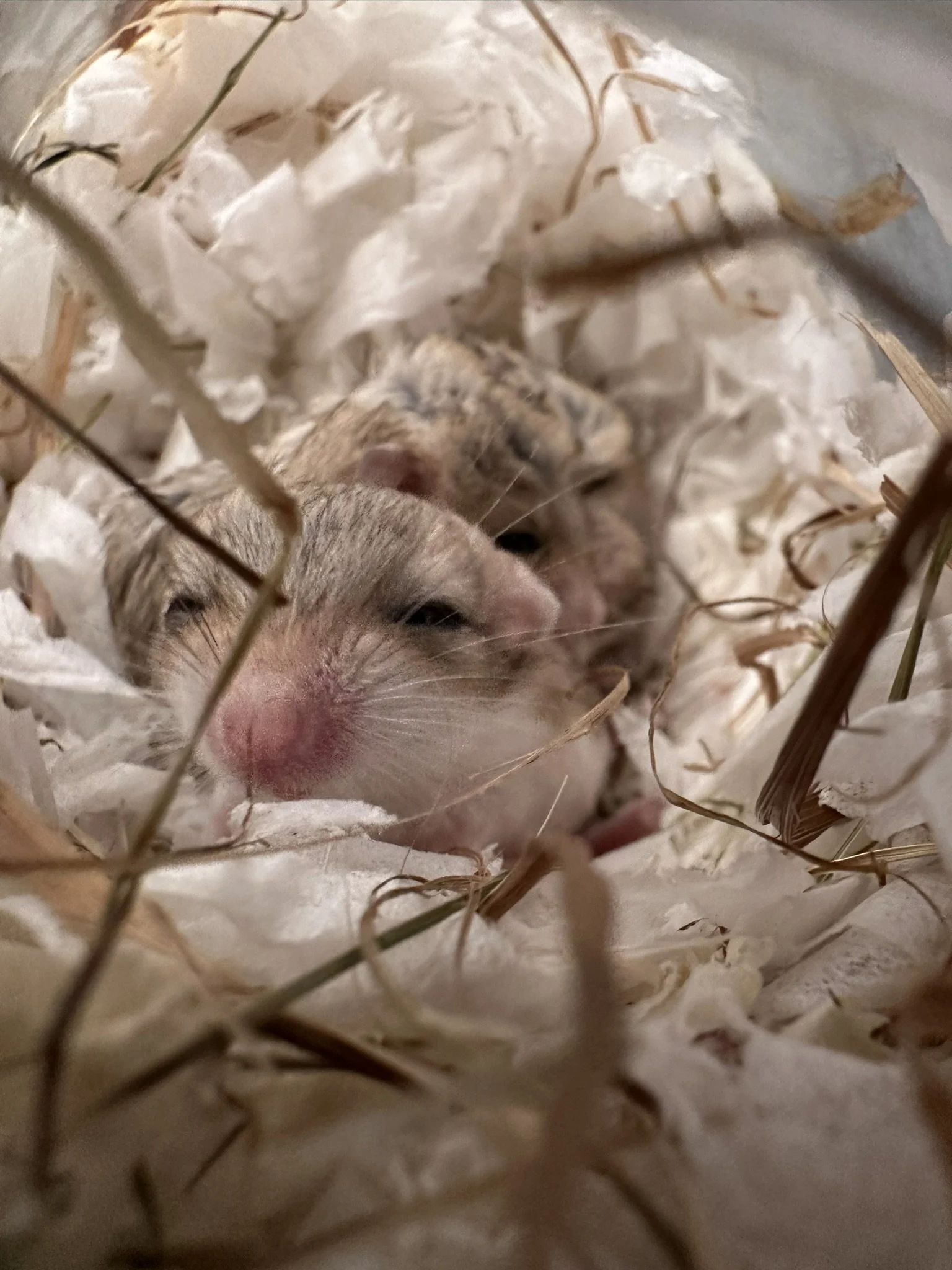
We have used dust-extracted wood shavings and sand–soil mixtures, with cardboard shelters, wooden nest boxes and other retreats. Early females were much more successful at rearing young when they could establish a nest beneath the substrate. Wood, hay and grasses also give the animals opportunities to explore, carry material and gnaw.
Enrichment & grooming
Scatter feeding, millet sprays, leafy forage and seed-bearing grass stems encourage investigation and foraging. Live insects, including crickets and locusts, can keep them busy.
Many of our doops readily use a wheel. A few have used one so persistently that we have limited access or removed it. We also offer sand baths for coat care and adjust access according to the individual animal and the condition of the bath.
Feeding in our collection
The dry foods we offer include hamster and gerbil mix, small seeds, rodent blocks, millet and some cat kibble. Fresh greens and vegetables are offered through the week, alongside live or dried insects.
Seasonal forage adds variety, including seeding grass stems, suitable flowers and occasional nuts.
“Fluffy potatoes” with personalities
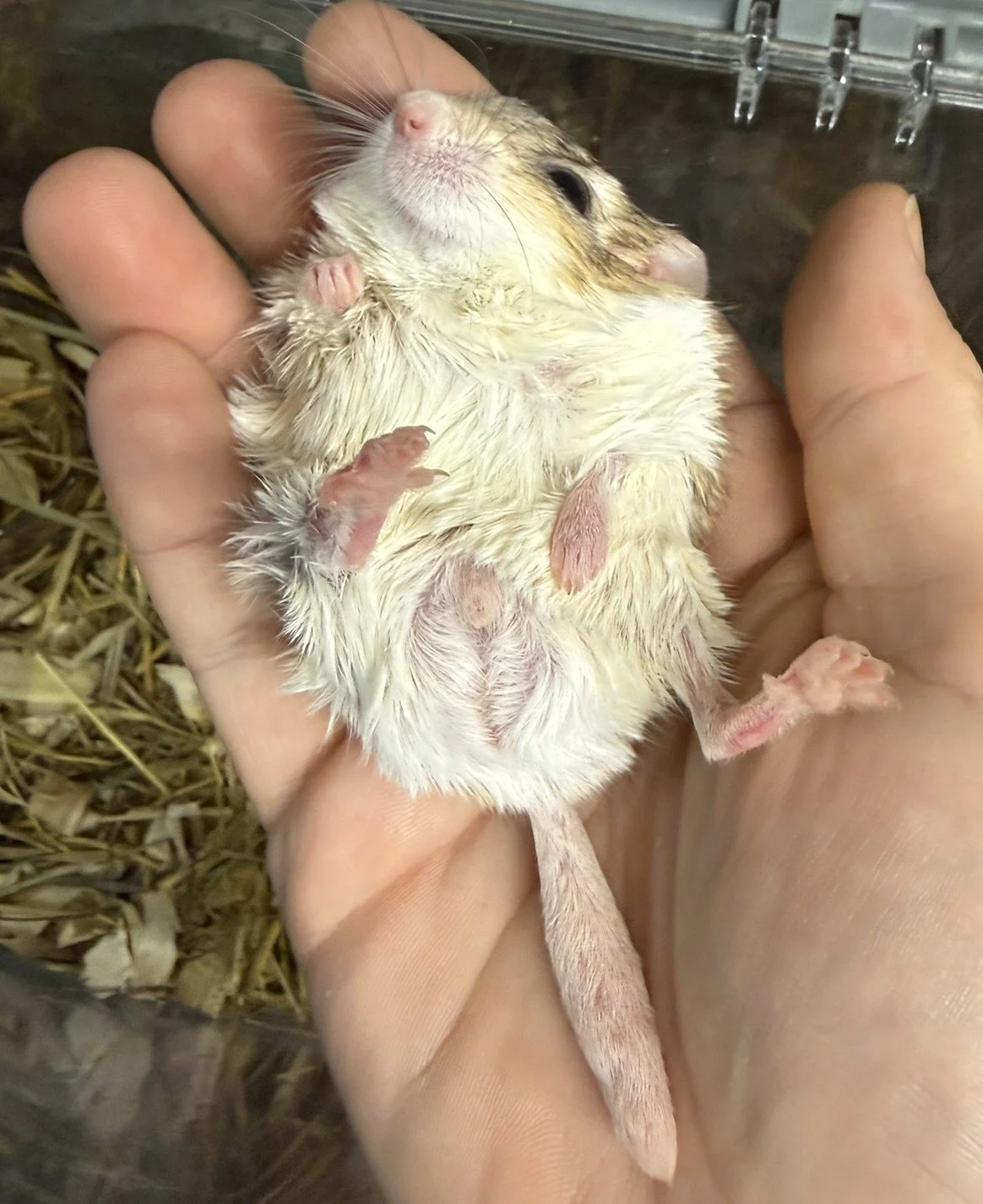
Many have been exceptionally relaxed, sometimes settling on their backs and falling asleep in our hand. That is how they earned the affectionate nickname “fluffy potatoes”.
They are not all the same, though. We have also kept very defensive individuals that vocalised loudly or lunged when approached. Their individual temperament matters far more than a reputation for being docile.
Social management
Early breeding attempts taught us that a male and female could not always remain together. Some females bit males, and on rare occasions those attacks were fatal. We remain cautious about assuming that a compatible pair or group will stay compatible.
We have kept male-only and female-only groups, finding males more tolerant overall within our own collection. Our usual advice to new keepers is to plan for individual housing, with the ability to separate animals promptly if necessary.
Breeding experience
We have bred doops consistently for more than twenty years. In our own lines, breeding has gradually become more reliable and less obviously seasonal, with less aggression during introductions. Some established breeding pairs now remain together and share a nest with their young.
We normally allow a female up to three litters before retiring her from breeding and retaining younger animals for a future generation, often the following year. This is our own management approach, rather than a universal breeding schedule.
The 2026 breeding season has produced a noticeable female bias in our collection, despite changes to pairings and housing. We do not yet have an explanation for that observation.
Highlights & looking ahead
Discovering that duprasi could be shown was another unexpected pleasure. Winning rosettes and certificates with our doops has given us some very fond memories.
We plan to continue maintaining these lines, bringing in further bloodlines where suitable animals are available. Health and temperament remain central to how we select youngsters to retain for future breeding.
From our collection
Collection photographs
Sources & further reading
- Animal Diversity Web — Pachyuromys duprasi
- Felt, Hussein & Helmy (2008) — captive Egyptian fat-tailed jird biology, breeding and husbandry
Natural history reviewed: 4 November 2026. Collection notes updated: 23 October 2026. Photographs added: 4 November 2026.