
Species profile · Exotic rodents
Golden spiny mouse
Acomys russatus
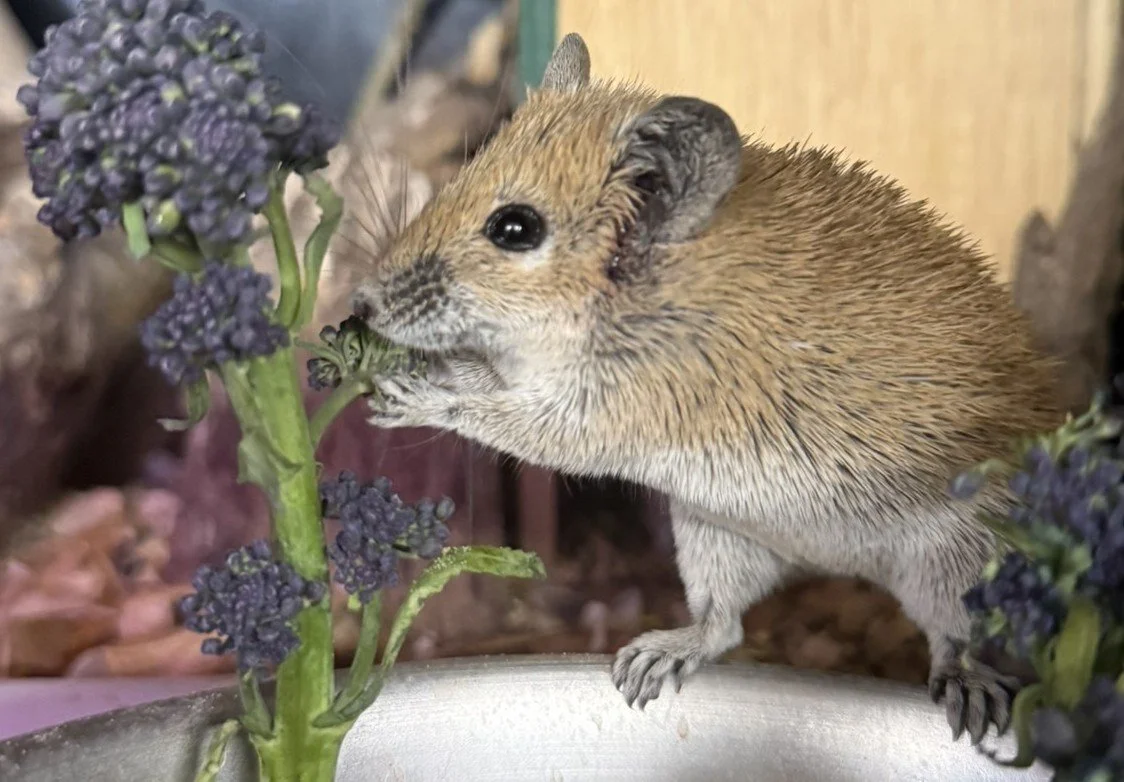
Golden spiny mice take their name from their warm-coloured coat and stiffened, bristly hairs. These desert rodents are especially interesting for the flexibility of their activity patterns and the advanced development of their newborn young.
- Classification
- Rodentia · Muridae
- Native range
- Northeast Africa and Middle East
- Habitat
- Rocky arid habitats
- Activity
- Flexible · often diurnal in the wild
- Wild diet
- Invertebrates, seeds and plants
- Lifestyle
- Social · rock-dwelling
In the wild
Natural history
Distribution & habitat
Rocky desert slopes, boulder fields and dry watercourses provide shelter. Crevices offer protected resting places in an exposed landscape.
Behaviour & activity
Golden spiny mice often forage by day where they coexist with nocturnal common spiny mice. Studies show they can shift towards night-time activity when that competitor is absent; describing them as invariably diurnal would be misleading.
Diet & foraging
The diet includes insects and other invertebrates, together with seeds and plant material. Food also supplies moisture in an environment where surface water is scarce.
Life cycle & reproduction
Gestation lasts approximately five to six weeks. Unlike many mice, newborns arrive furred and comparatively well developed. Other females may assist with care within a social group.
02 · At Exotic Rodentry
Within our collection
Collection notes updated: 2 November 2026
These notes describe our own animals and experience. Feeding details record our current practice and are not a complete care guide.
We have kept golden spiny mice since around 2012. Their warm colouring first caught our attention, and maintaining this unusual species within UK collections remains an important personal aim.
First kept: Around 2012
Current animals: One male and one female
Collection history
Our current animals came from a private UK keeper, from European stock. We acquired two males and two females and initially housed them as two separate pairs. After losing a male from one pair and a female from the other over several months, we paired the remaining animals.
Housing & enrichment
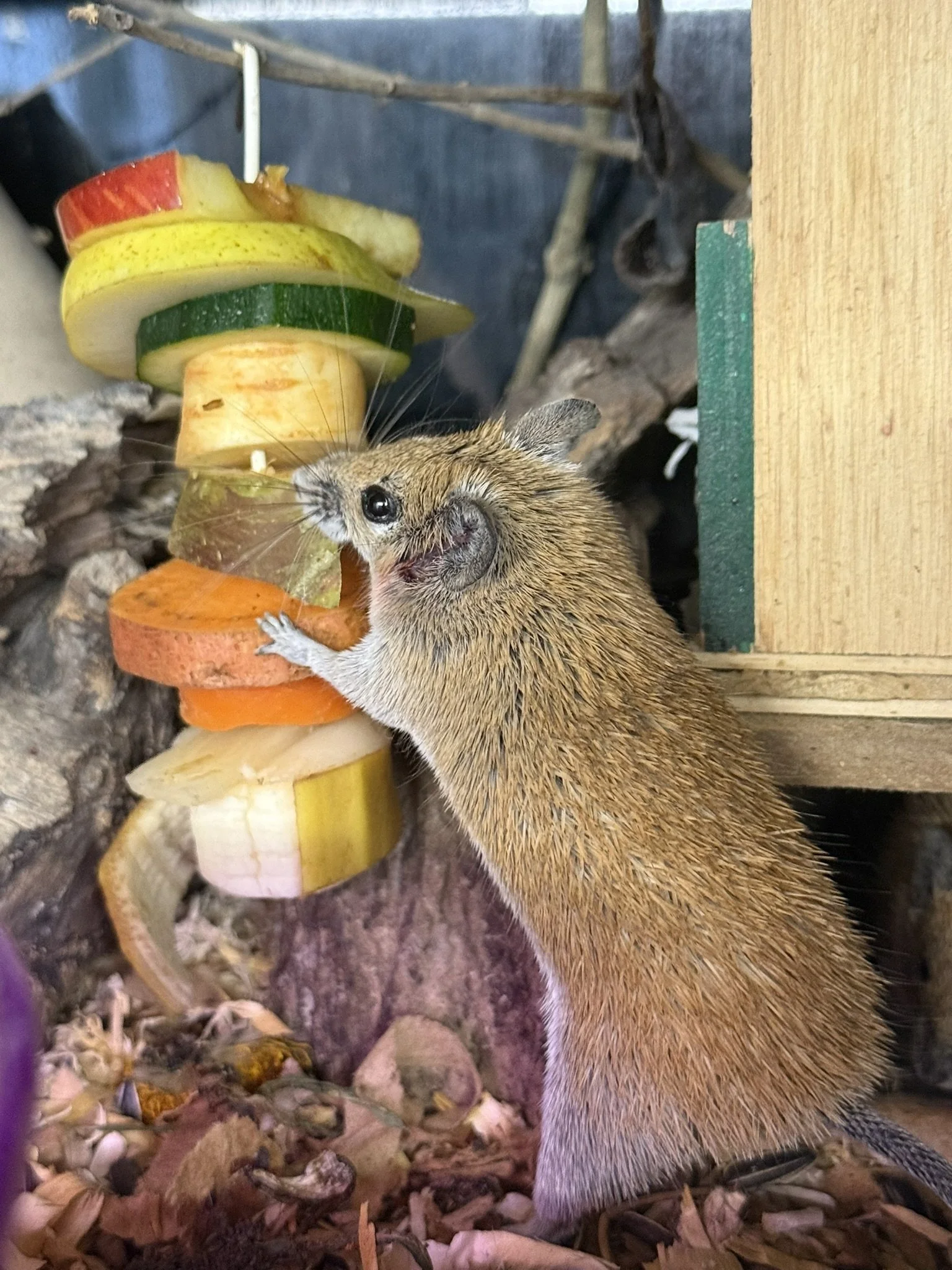
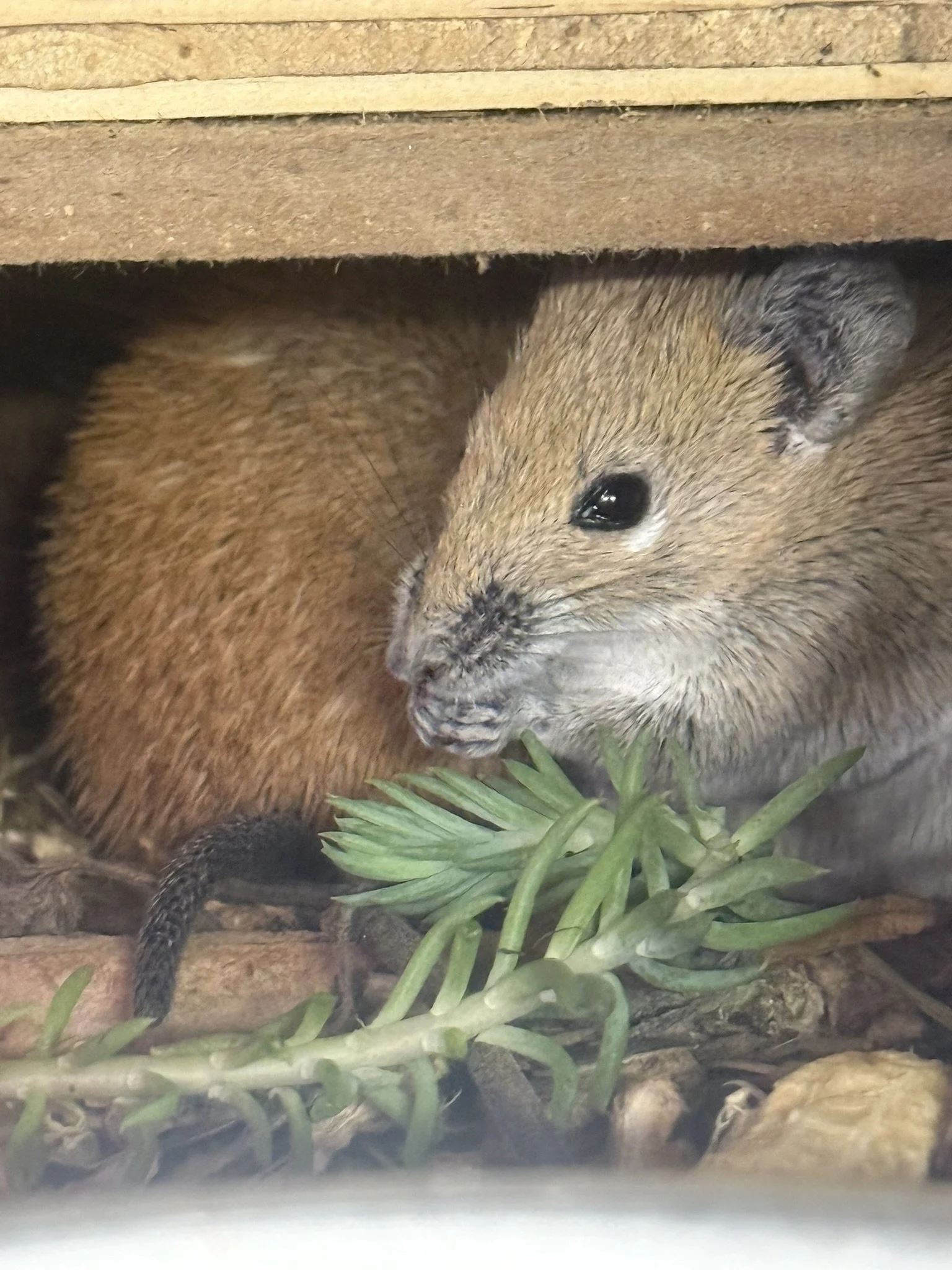
Our pair live in a front-opening tank, with shavings towards the rear and sand at the front. Nest boxes, logs, branches and rocks create places to climb, retreat and explore. Seeding grasses and live invertebrates are particularly popular, and we offer food on feeding skewers, scattered through the enclosure and by hand. They readily strip leaves from browse and gnaw fresh branches.
Feeding in our collection
We offer a varied selection of rodent mix and pellets, budgie and parrot seed mixes, and some cat and kitten kibble. Live and dried invertebrates, vegetables, leafy greens and small portions of fruit add variety. Seasonally available forage includes suitable fruits, berries, nuts, flowers and leafy plants. Our pair are enthusiastic feeders and sample a little of most things offered.
Individual character
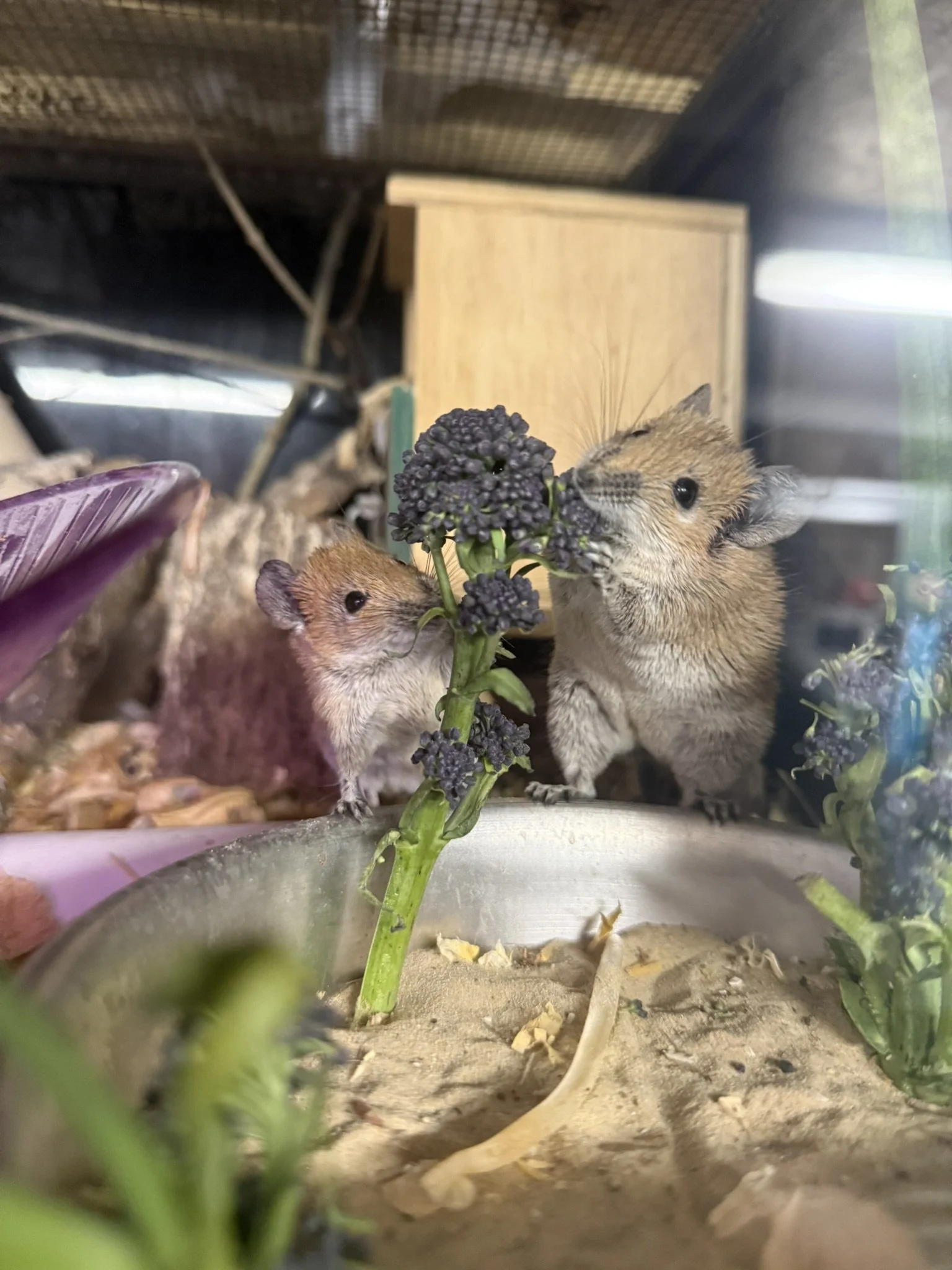
The current pair have become remarkably curious and friendly without any deliberate programme of taming. They take food from our hands, step onto a hand held at the front of the tank and sometimes climb over our forearms while we work. Watching that confidence develop has been an unexpected highlight. They share a nest box or nesting site and spend much of their resting time together.
Breeding experience
In previous years we maintained self-sustaining groups, although numbers never increased as rapidly as we have experienced with some other Acomys species. Our current pair have not produced any young.
Future plans
We hope to acquire more animals, ideally younger individuals, to broaden our breeding options and help strengthen the captive population in the UK. If breeding is successful, we would like to maintain larger family groups.
From our collection
Collection photographs
Sources & further reading
Natural history reviewed: 2 November 2026. Collection notes updated: 2 November 2026. Photographs updated: 2 November 2026.