
Species profile · Small mammals
Short-tailed opossum
Monodelphis domestica
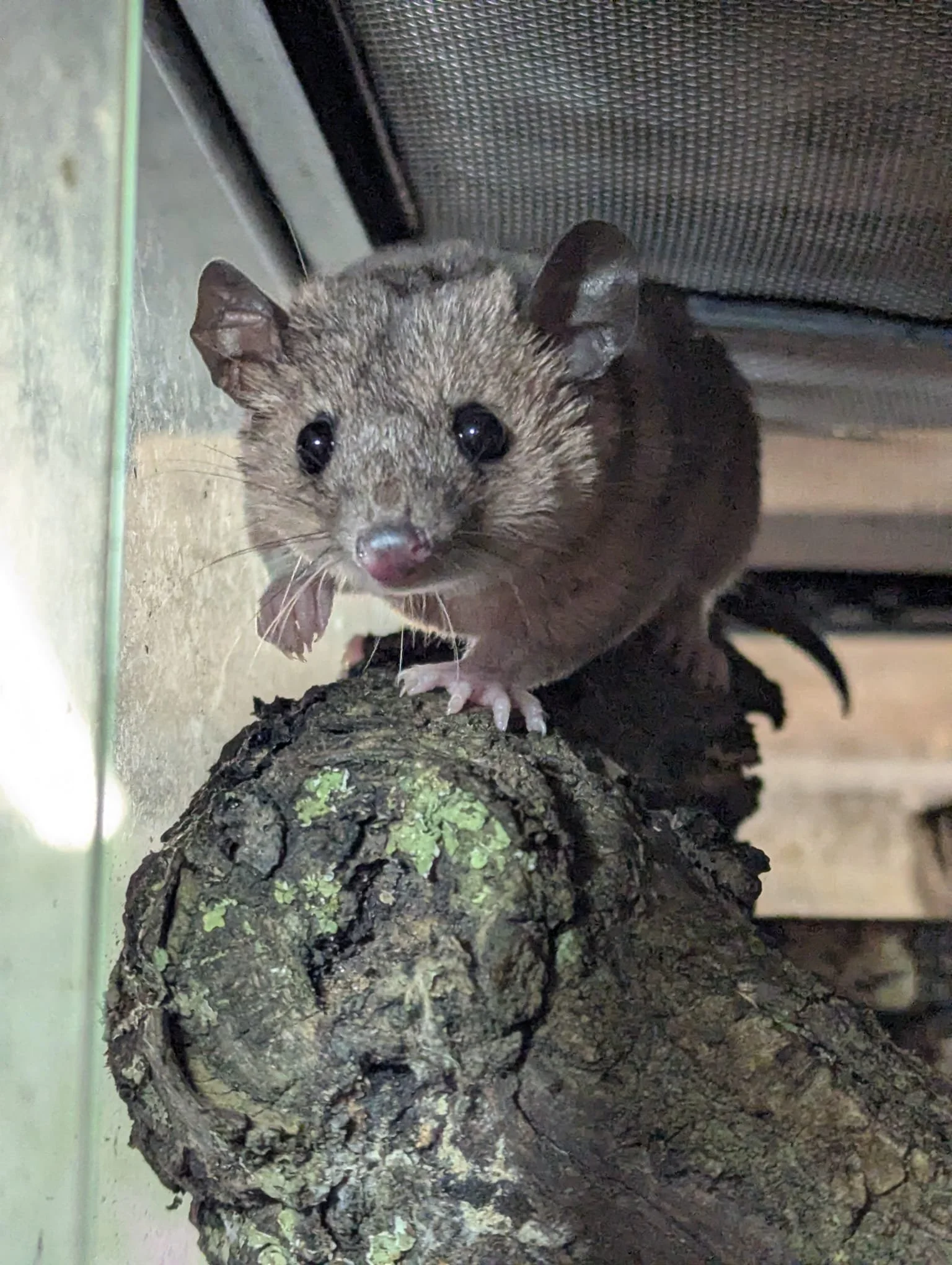
The grey short-tailed opossum is a South American marsupial, rather than a rodent. Its pointed snout and short, partly grasping tail accompany a largely ground-based life searching for small prey and other food.
- Classification
- Didelphimorphia · Didelphidae
- Native range
- Central South America
- Habitat
- Woodland, scrub and grassland
- Activity
- Variable · often twilight or night
- Wild diet
- Insects, fruit and small animals
- Lifestyle
- Mainly terrestrial · solitary
In the wild
Natural history
Distribution & habitat
Found in parts of Brazil, Bolivia, Paraguay and Argentina, this species uses a variety of wooded and open habitats. It searches at ground level and in low vegetation.
Behaviour & activity
Adults are generally solitary and can be territorial. Scent marking and a well-developed sense of smell are important in communication, including encounters during breeding.
Diet & foraging
An opportunistic omnivore, it eats insects and other small animals as well as fruit. Its natural diet differs substantially from that of a grazing or seed-specialist rodent.
Life cycle & reproduction
Gestation is exceptionally short, around two weeks. The tiny, undeveloped young depend on their mother for milk and protection. Male scent signals can stimulate female reproductive activity. Much of the detailed knowledge of this species comes from studies of captive animals.
At Exotic Rodentry
Within our collection
Collection notes updated: 23 October 2026
These notes describe our own animals and experience. Feeding details record our current practice and are not a complete care guide.
We first kept short-tailed opossums in 2009. At the time, we had not seen them kept locally and wanted to try something different. A video of an opossum carrying leaf litter in its tail caught our attention, and their unusual reproductive biology added to the fascination.
Collection history
Our first animals were pets, before we later began breeding them. The early attempts involved some difficult lessons about aggression and introductions, but experience brought more frequent success. After a break from keeping the species following 2018, we welcomed a new trio in January 2026.
Our current animals
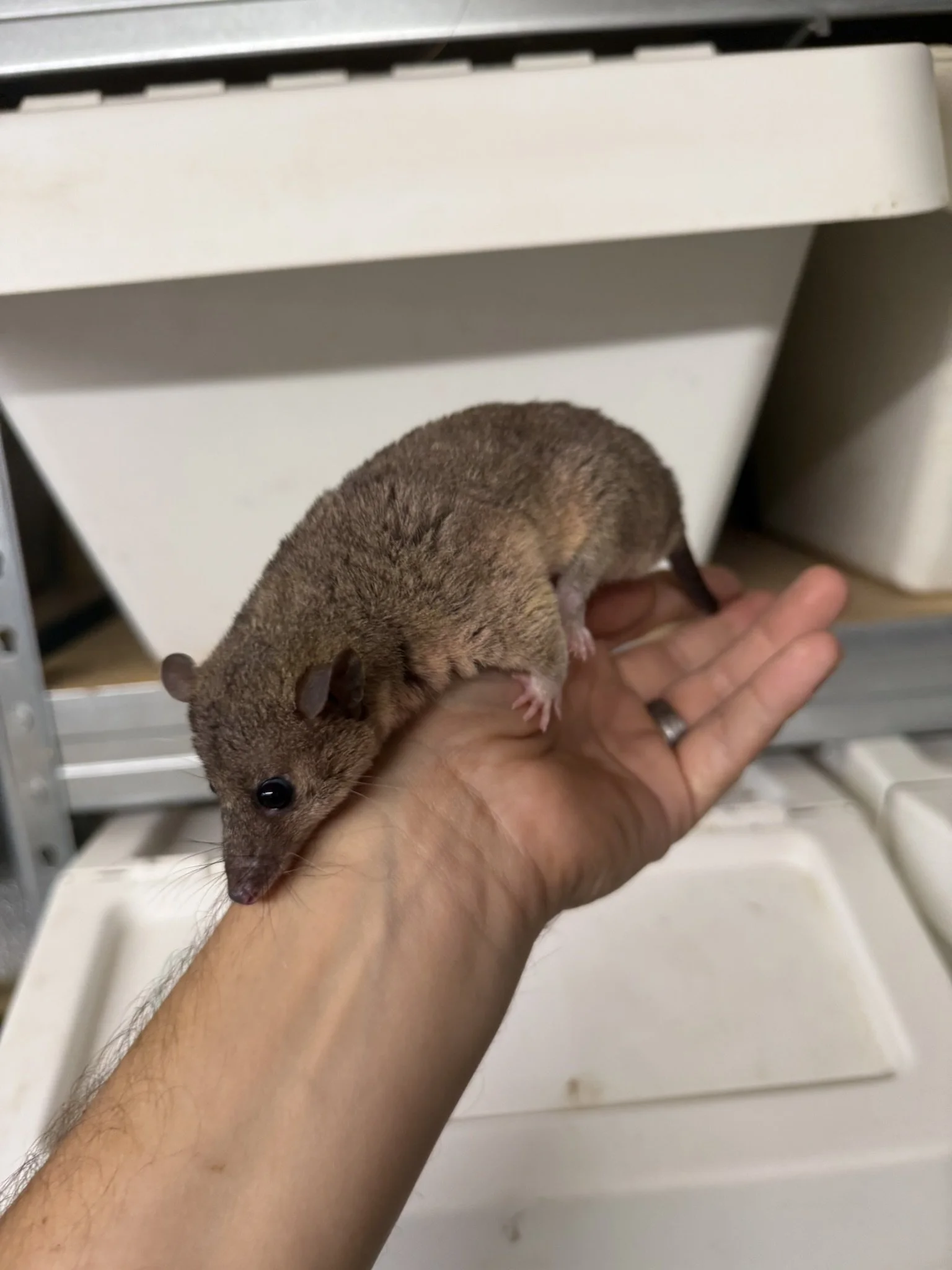
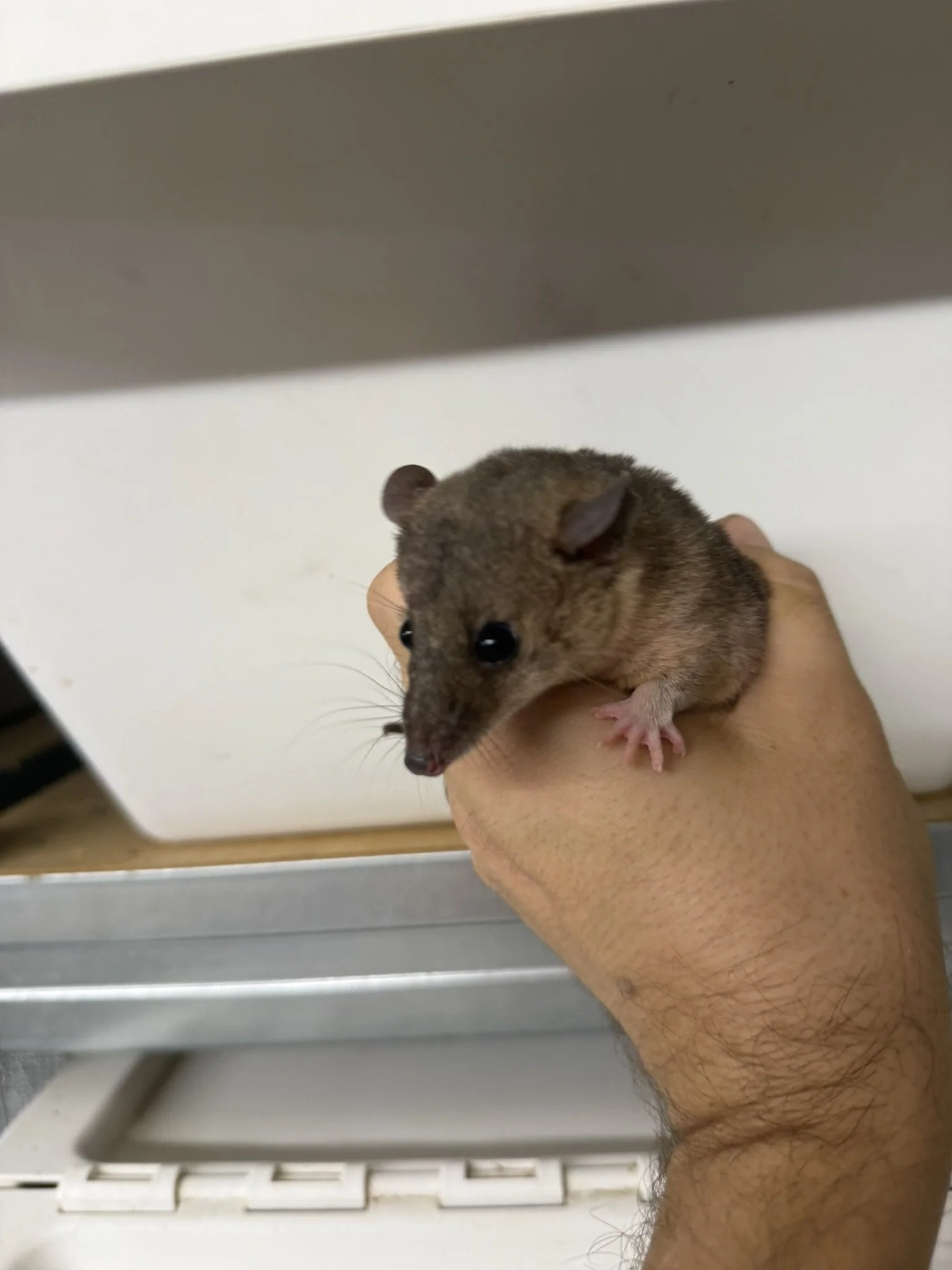
We currently keep one male and two females, acquired as recently weaned youngsters from a private collection. They are bold individuals who readily hand-feed and, during supervised time with us, may settle into a pocket or hood.
Housing
We use front-opening glass enclosures with mesh tops for ventilation. We have also used wooden vivariums in the past. Although predominantly ground-dwelling, our animals readily explore branches and logs, so we provide climbing opportunities as well as plenty of usable floor space, leaf litter and multiple nest boxes.
A soil-based substrate works well for us. We have found that individuals often choose particular corners as toilet areas, making those spots easier to clean or fit with a small litter tray.
Enrichment
Leaf litter provides plenty to investigate. Offering a variety of live insects encourages sniffing, searching and hunting through different parts of the enclosure. We also scatter suitable nesting material for them to gather and carry in their tails, which remains one of our favourite behaviours to watch.
Feeding in our collection
Our current feeding routine includes high-protein cat and kitten kibble, wet cat food, a variety of live insects and occasional defrosted rodents or chicks. We also use insectivore foods and selected supplementary foods, with small amounts of fruit.
Behaviour & compatibility
Our animals are mainly active at night, although the scent of fresh livefood can bring them out earlier. Personalities vary, and their confidence with us does not mean they are reliably compatible with other opossums.
One important lesson has been that an apparently settled pairing may not remain compatible. Aggression can develop quickly, so we treat introductions and breeding encounters cautiously and monitor individuals closely.
Breeding experience
We previously bred this species successfully, but have not done so since 2018. In autumn 2026 we are beginning breeding attempts with the current animals and hoping for winter litters.
The role of male scent signals in stimulating female reproductive activity is an important part of their biology. Published research has helped us understand why introductions need more planning than simply housing a pair together.
Future plans
We hope to breed from the current animals and exchange youngsters with other keepers to bring in additional bloodlines and establish further pairings.
From our collection
Collection photographs
Sources & further reading
- Animal Diversity Web — Monodelphis domestica
- Jackson & Harder (1996) — male pheromones and induction of oestrus
- Hinds et al. (1992) — hormonal evidence for induced ovulation
Natural history reviewed: 2 November 2026. Collection notes updated: 23 October 2026. Photographs added: 2 November 2026.