
Species profile · Exotic Rodents
Eurasian harvest mouse
Micromys minutus
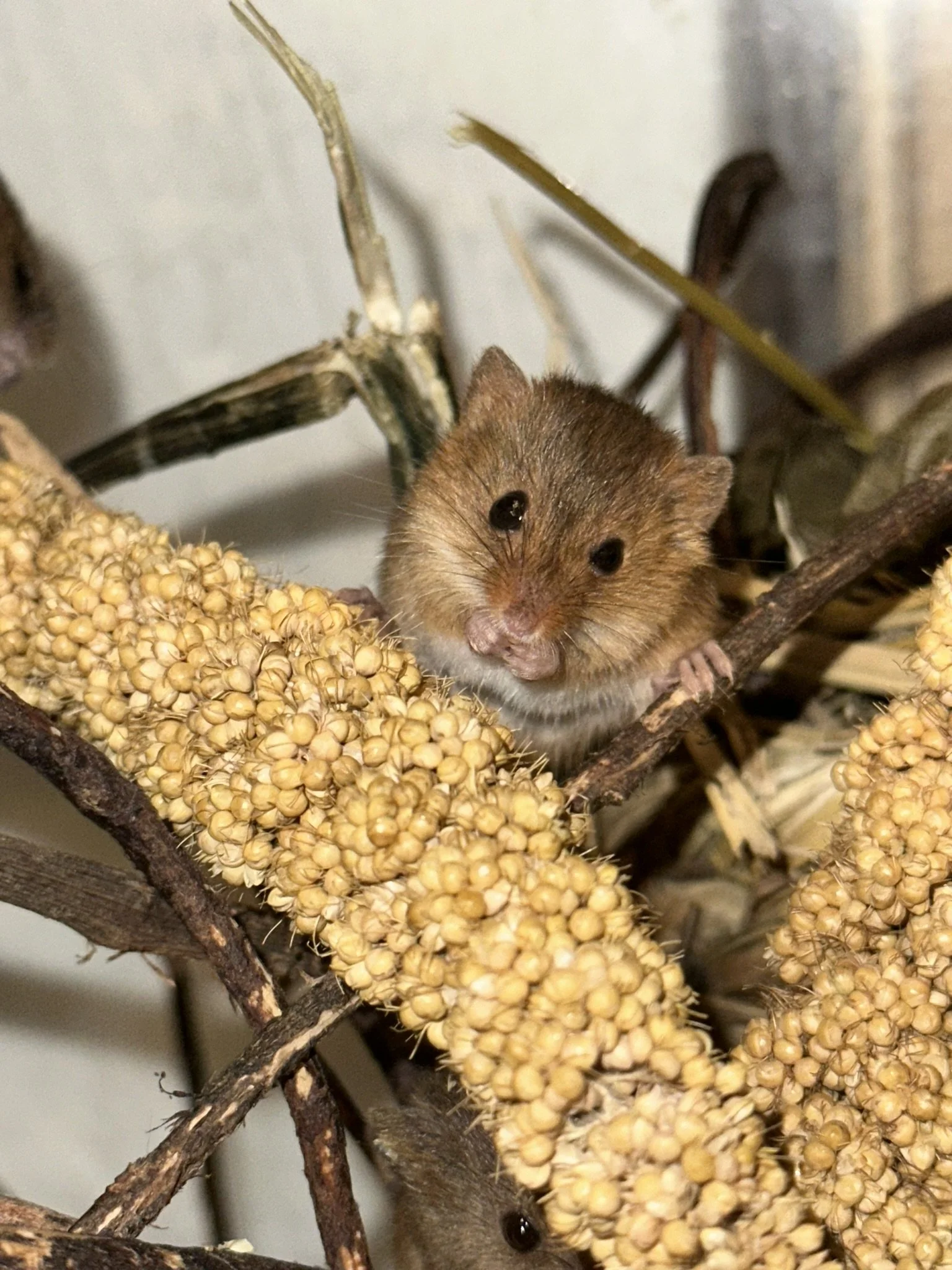
A tiny specialist of tall vegetation, the Eurasian harvest mouse can move through grass stems using its feet and grasping tail. Its woven, spherical breeding nest is one of the most distinctive structures made by a British mammal.
- Classification
- Rodentia · Muridae
- Native range
- Europe and parts of Asia
- Habitat
- Tall grass, reedbeds and field margins
- Activity
- Short bouts by day and night
- Wild diet
- Seeds, fruit and invertebrates
- Lifestyle
- Climbing among vegetation
In the wild
Natural history
Distribution & habitat
Harvest mice inhabit tall, dense vegetation, including grassland, reedbeds and crop margins. Interconnected stems provide both climbing routes and support for nests.
Behaviour & activity
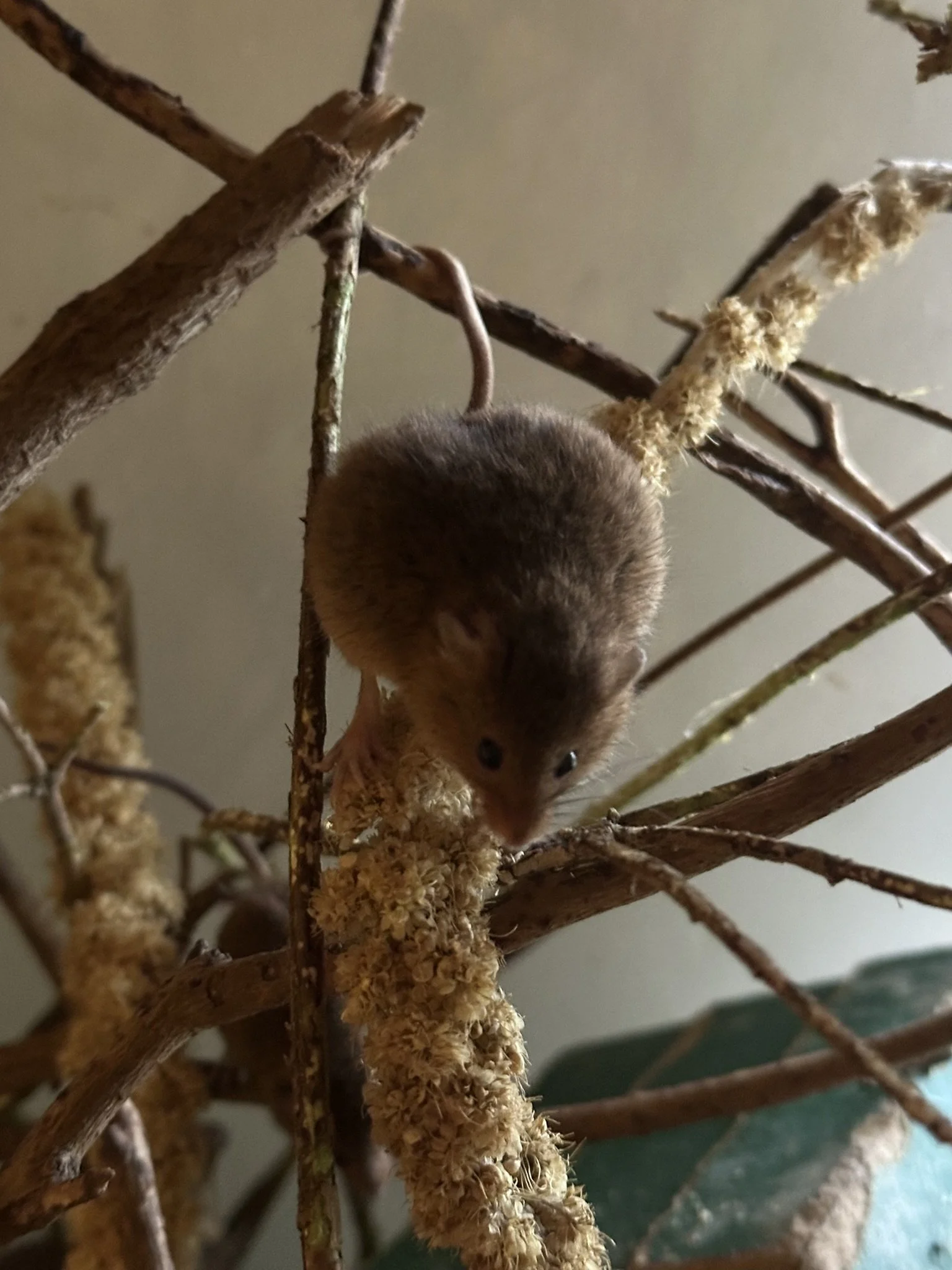
The prehensile tail grips stems and helps with balance, leaving the forefeet free to handle food. Activity alternates with rest across day and night; this species does not hibernate.
Diet & foraging
Seeds, grains and fruit are eaten alongside insects and their larvae. Food choices change through the seasons as different resources become available.
Life cycle & reproduction
Females weave breeding nests from living grass blades above ground. Several litters may be raised during favourable warmer months. Young are born blind and hairless, developing rapidly before leaving the nest.
02 · At Exotic Rodentry
Within our collection
Collection notes updated: 2 November 2026
These notes describe our own animals and experience. Feeding details record our current practice and are not a complete care guide.
We have kept Eurasian harvest mice on and off since around 2008. Native mammals have always been a particular interest of ours, and these small, active climbers remain a pleasure to watch.
First kept: Around 2008
Current animals: Two breeding groups, each with approximately twelve adults
Collection history
Our current groups combine animals from zoological, educational and private collections. Numbers have varied with the projects we have supported. When supplying animals for release projects, we kept more, smaller breeding groups. We now maintain two colonies, each with around a dozen adults, with numbers changing as surplus animals leave and new breeding stock arrives.
Housing & enrichment
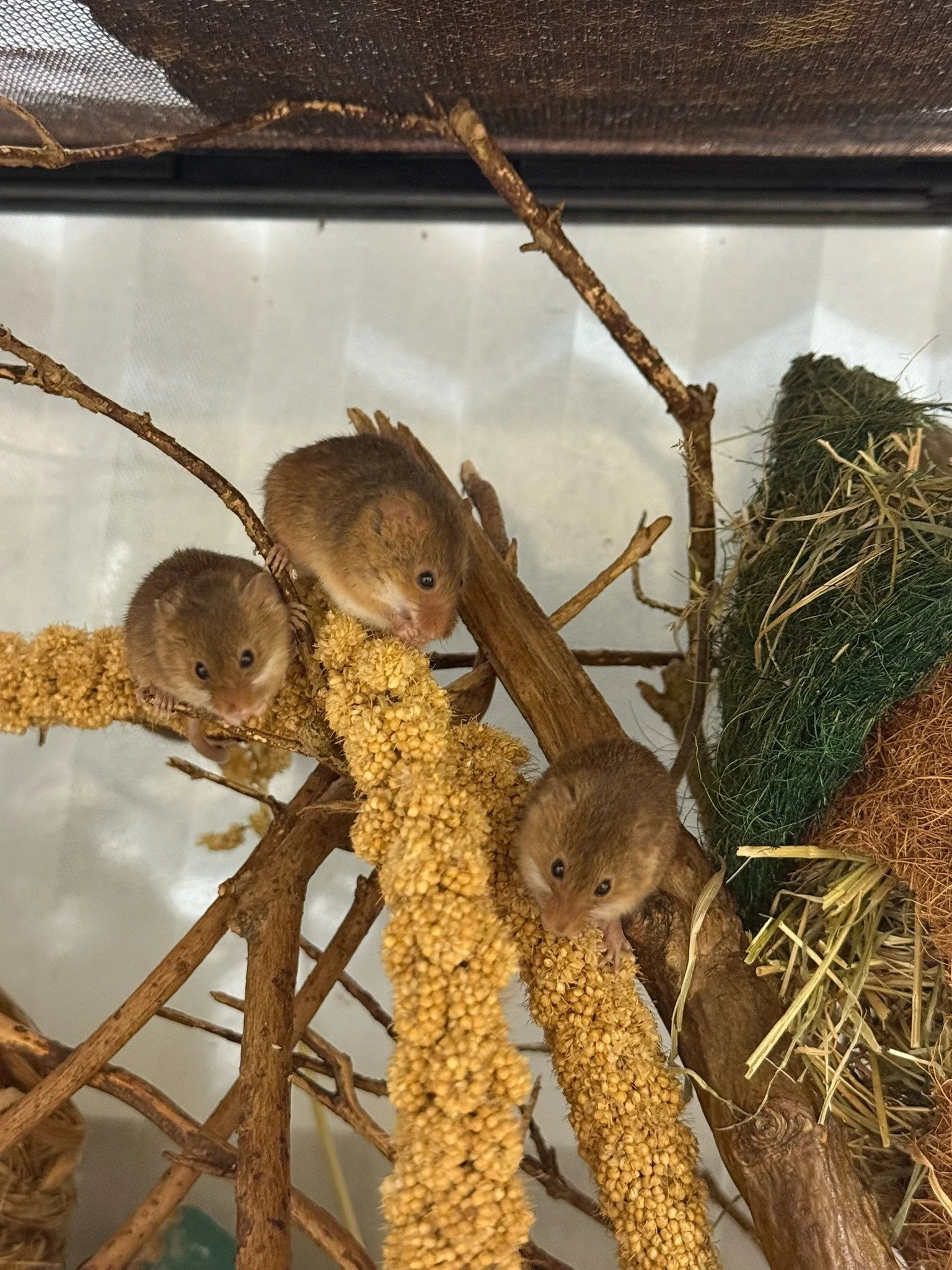
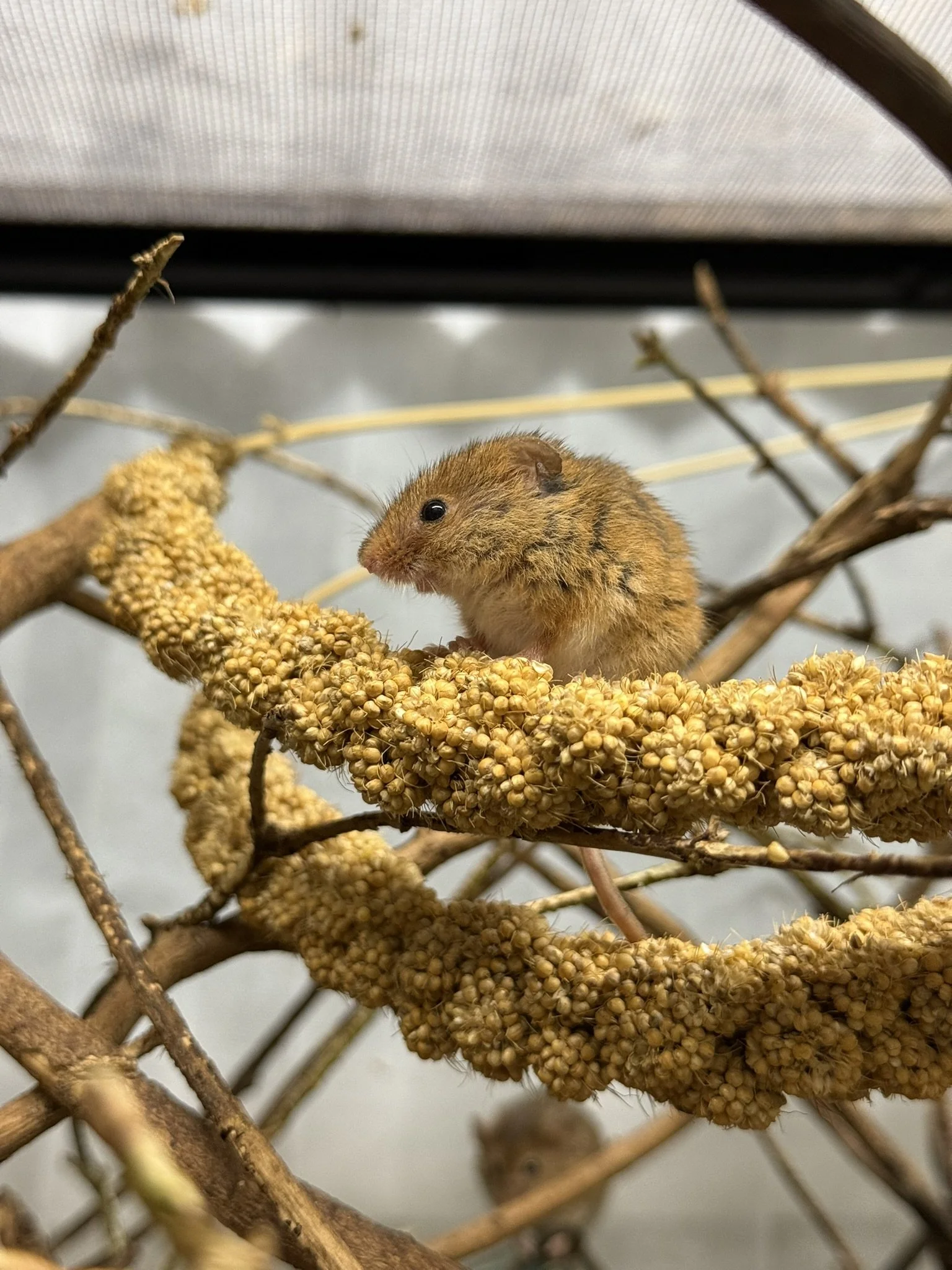
We favour tall, front-opening glass tanks furnished with branches, browse and long grasses. Dense planting and furnishings give them routes through the enclosure and places to retreat. Given suitable grasses, they weave their own ball-shaped nests, although they also make use of a variety of sheltered nesting places. Live insects, long-stemmed and seeding grasses, and seasonal forage provide opportunities to climb, search and feed. Our animals also readily use an exercise wheel.
Feeding in our collection
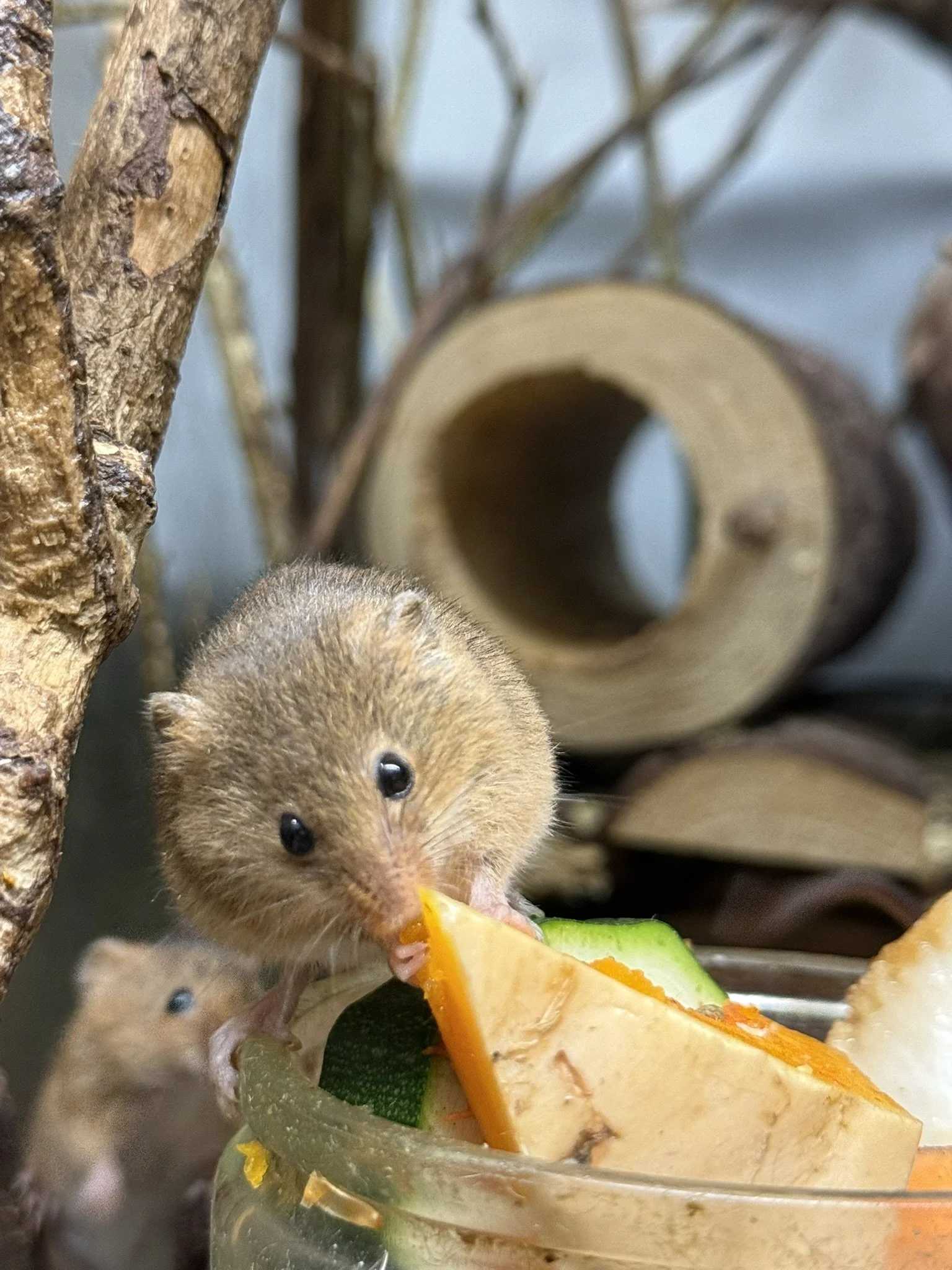
Our feeding routine includes small seeds from foreign finch, canary, budgie and parakeet mixes, together with wheat, millet and other seed sprays. We also offer small amounts of rodent mix and blocks, live and dried invertebrates, and a variety of fruit and vegetables. Feeding skewers help us remove uneaten fresh food easily. Suitable seasonal forage adds flowers, fruits, berries, nuts and seeds throughout the year.
Behaviour & group management
Our harvest mice are extremely active and entertaining, using their prehensile tails as they move through complex climbing routes. Some become surprisingly confident around us and investigate almost everything. Our experience of keeping groups is a collection observation, rather than a description of all wild social behaviour. When space or resources become contested, we have seen chasing and injuries, particularly to tails. Females can become defensive around resources, so we monitor compatibility and group size closely. We have previously kept harvest mice alongside bank voles, with both species breeding in the same enclosure. That is an account of our own experience, rather than a general recommendation for mixed-species housing.
Breeding experience
In our indoor groups, breeding has continued through the year when conditions allowed. In outdoor or unheated accommodation, we have seen breeding slow or stop until spring. We have also observed reduced breeding as groups grow and competition increases. This prompts a review of numbers, space and resources rather than being treated as a method of population control.
Highlights & future plans
Supplying animals for several breeding and release projects across the UK has been a memorable part of our work with this species. We plan to continue breeding, exchanging animals to maintain genetic diversity and supplying suitable collections and private keepers. We enjoy showing how engaging harvest mice can be when their needs are understood and met.
From our collection
Collection photographs
Sources & further reading
- Mammal Society — harvest mouse ecology, nests and seasonal breeding
- Animal Diversity Web — Micromys minutus
Natural history reviewed: 2 November 2026. Collection notes updated: 2 November 2026. Photographs added: 4 November 2026.